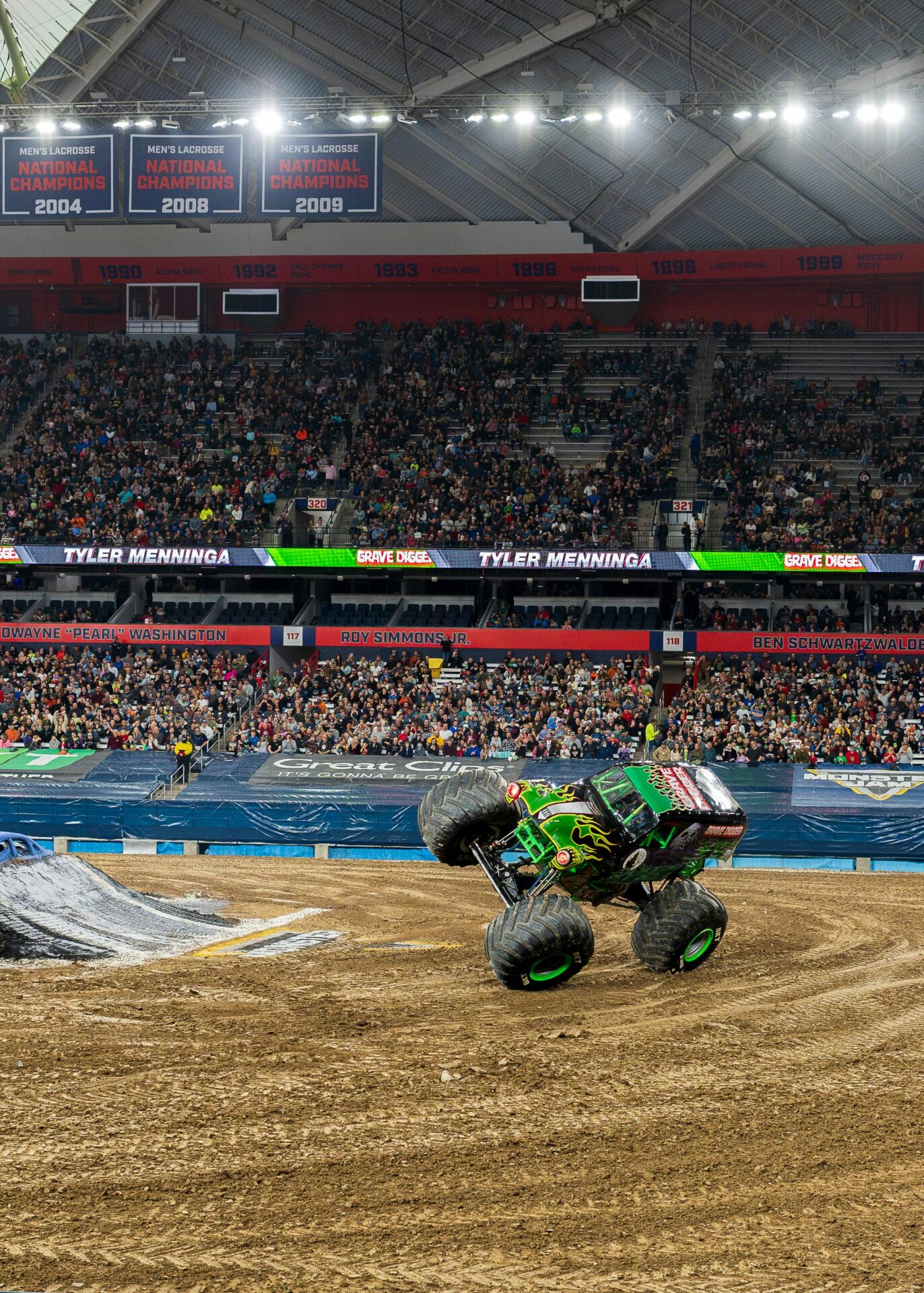
Monster truck driving is often seen as a high-octane, thrilling spectacle that captivates audiences with its larger-than-life vehicles and daredevil stunts. The massive trucks, with their towering wheels and roaring engines, perform gravity-defying feats in front of thousands of spectators. While the showmanship and entertainment value of these events are undeniable, the true artistry of monster truck driving goes far beyond what the audience can see. Behind the wheel of these gigantic machines is a driver whose skill, precision, and control are crucial to every performance. The world of monster truck driving demands more than just bravery; it requires an extraordinary combination of technique, experience, and an intimate understanding of the vehicle itself. In this article, we will explore the many facets of monster truck driving, focusing on the skills, precision, and control that make it a unique and demanding form of motorsport.
The Skill Set of a Monster Truck Driver
Monster truck drivers are often perceived as fearless daredevils, but the reality is that driving these massive vehicles requires an intricate set of skills that go far beyond what most people could ever imagine. Unlike traditional car racing, where drivers are focused on maintaining speed around a track, monster truck drivers must constantly adapt to an ever-changing environment, both in terms of the obstacles they face and the behavior of their trucks.
One of the key skills that a monster truck driver must master is the ability to manage the immense power of the vehicle. These trucks are powered by engines that produce up to 1,500 horsepower—far more than most race cars. This raw power is essential for performing stunts like jumping over cars, crushing obstacles, and executing high-speed maneuvers. However, managing such power requires a great deal of control. Drivers must be able to apply the throttle and brakes at just the right moments to avoid losing control of the truck.
In addition to power management, monster truck drivers must also possess excellent hand-eye coordination. Unlike driving a regular car, where the primary focus is on steering and braking, monster truck driving involves precise manipulation of several controls simultaneously. A driver must work with both the steering wheel and pedals while keeping a constant eye on the terrain in front of them, adjusting their movements as the truck bounces and shifts with every landing. Drivers often have to make quick, reactive decisions to avoid flipping the truck or running into obstacles.
Timing and reaction speed are also essential in the world of monster truck driving. A small mistake—whether it’s landing at the wrong angle, over-accelerating on a jump, or misjudging the distance to an obstacle—can result in a wreck or a failed stunt. Drivers must be able to react quickly to any situation, whether it’s a sudden shift in the truck’s momentum or an unexpected obstacle that appears in their path.
The ability to read the course and predict how the truck will behave is another key skill. Course familiarity is essential for drivers to navigate obstacle-laden arenas or stadiums, as every course presents its own unique set of challenges. This requires a level of anticipation, as drivers must know how the truck will respond to various obstacles like ramps, dirt mounds, and even other trucks. A successful monster truck driver is one who can seamlessly transition between various parts of the course, making precise adjustments to ensure that they maintain control at all times.
The Precision Required for Stunts and Freestyle Events
Monster truck events, especially freestyle competitions, are an all-out display of a driver’s skill, precision, and creativity. Unlike racing, where the goal is to finish in the fastest time, freestyle events challenge drivers to demonstrate their mastery over the truck by performing stunts, tricks, and daredevil maneuvers. The best drivers are those who can combine creativity with precision, taking full advantage of their truck’s capabilities while pushing the limits of what is possible.
One of the most iconic stunts in monster truck competitions is the backflip. A successful backflip requires not only incredible timing but also an understanding of the truck’s aerodynamics. Drivers must launch the truck off a ramp at just the right angle to allow the momentum to carry it through a full flip in the air. If they miscalculate, the truck could land upside down or crash. Even a small misjudgment in the angle or speed can cause a dangerous crash, making precision vital for performing these gravity-defying tricks.
Another key element of precision in freestyle events is how the driver handles the truck’s suspension system. Monster trucks are equipped with massive, highly flexible suspension systems that allow the vehicles to absorb the shock of landing after jumps and stunts. However, the suspension must be carefully controlled to ensure that the truck lands smoothly. When performing tricks like wheelies or donuts, drivers need to maintain constant control over the suspension to keep the truck stable and avoid rolling over. The precision with which a driver uses the suspension system can often make the difference between a successful stunt and a disaster.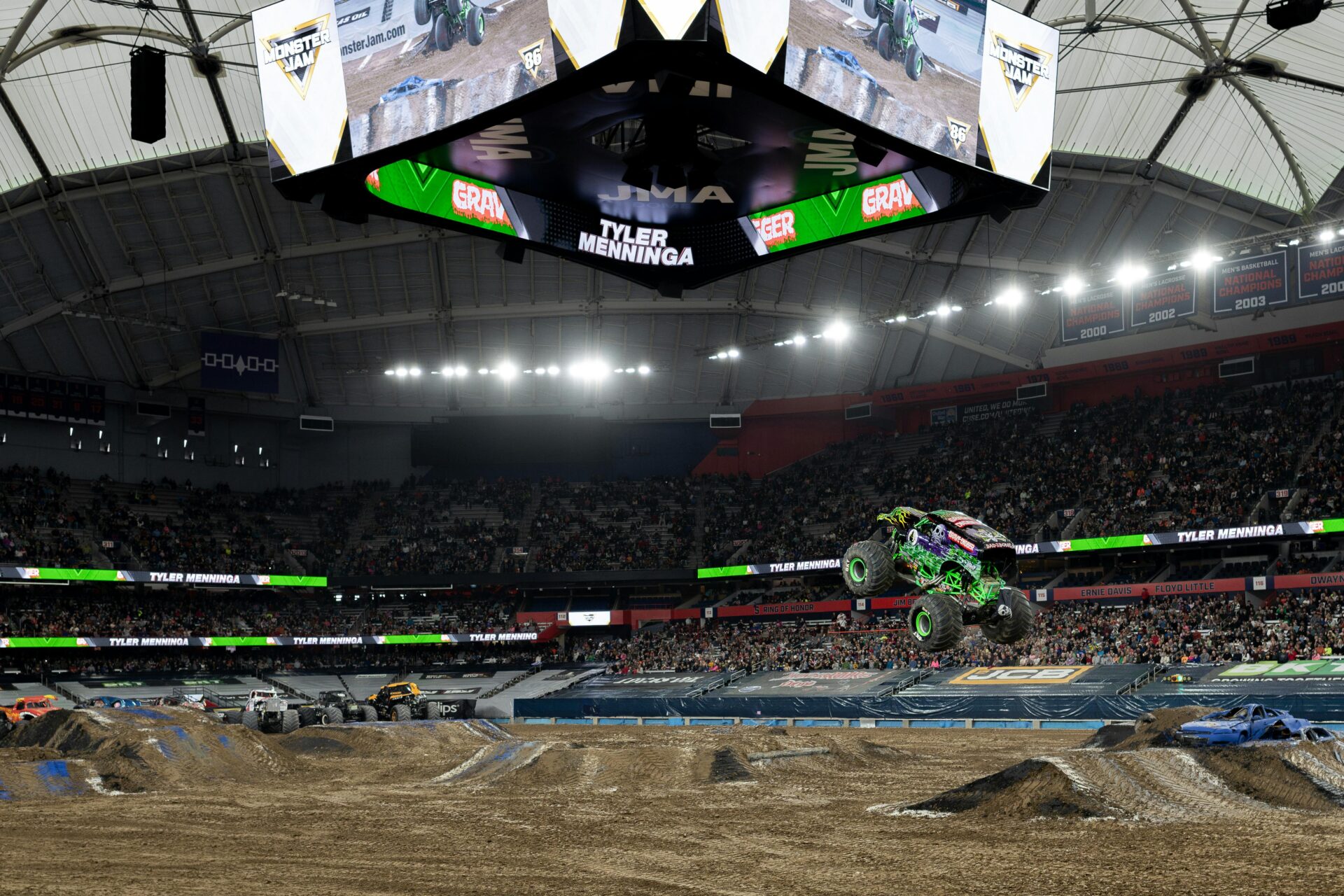
Drivers also need to have an understanding of the trucks’ limitations. These massive machines are designed to withstand incredible amounts of stress, but they are not invincible. Monster truck drivers must know the limits of their trucks in terms of speed, maneuverability, and durability. For instance, landing too hard from a jump can cause significant damage to the chassis or suspension, potentially ending the performance early. A skilled driver knows when to push the truck to its limits and when to back off to ensure a safe landing and a lasting performance.
Mastering these complex stunts takes years of practice, often beginning with extensive training in lesser vehicles before progressing to the massive trucks. Many drivers start their careers in smaller-scale motorsports, such as go-karting, dirt track racing, or off-road driving, where they learn the basics of vehicle control and precision handling before moving on to monster trucks.
The Control It Takes to Drive a Monster Truck
Control is perhaps the most important aspect of monster truck driving. Without control, all the skill and precision in the world would be meaningless. The massive size of the trucks, combined with their enormous tires and powerful engines, makes them inherently unstable, especially when navigating challenging terrain or executing stunts. To avoid flipping or crashing, drivers must maintain constant control over every aspect of the vehicle.
One of the most difficult aspects of control is the steering system. Monster trucks are equipped with four-wheel steering, which allows the driver to turn both the front and rear wheels. This provides greater maneuverability, especially in tight spaces or when navigating obstacles. However, it also requires a higher level of coordination, as the driver must simultaneously control both the front and rear steering while also managing the throttle and brake. The ability to keep the truck on course, even while bouncing over obstacles or executing tricks, is a key indicator of a driver’s control.
In addition to steering, drivers must be able to handle the truck’s braking system effectively. Monster trucks are equipped with massive disc brakes that can stop the vehicle quickly, but these brakes require careful modulation. Too much braking can cause the truck to tip over or lose its balance, while too little braking can result in out-of-control speeds or crashes. Control over braking is particularly important during high-speed maneuvers and when approaching jumps, as the driver must adjust their speed just before launch to ensure a clean, controlled takeoff.
Furthermore, the terrain itself presents unique challenges that test a driver’s ability to maintain control. The course is often made up of dirt ramps, car crushes, and uneven surfaces that cause the truck to bounce and sway unpredictably. Drivers must learn to read the terrain and anticipate how the truck will react to various obstacles. Mastering the art of landing is a critical component of control, as the truck’s suspension and shock absorbers must absorb the impact without causing damage or losing stability.
Finally, the immense physical demand of controlling a monster truck cannot be overlooked. These vehicles are not only heavy but also fast, making it physically taxing to maintain control during high-speed races or stunts. Drivers must possess a combination of strength, stamina, and mental focus to stay in control throughout an entire event, often while under extreme pressure to perform for an excited crowd.
Conclusion
Monster truck driving is far more than just a thrilling spectacle; it is an art form that demands incredible skill, precision, and control. The drivers behind these massive machines are not just thrill-seekers; they are highly trained professionals who have honed their craft over years of practice. Every jump, every wheelie, every trick requires a deep understanding of the truck’s capabilities, a quick reaction time, and the ability to adapt to the ever-changing terrain. The artistry of monster truck driving lies not just in the daring stunts but in the subtle, controlled movements that make those stunts possible. Behind every show, there is a driver who possesses a unique combination of technical expertise, physical coordination, and mental acuity—a true master of their craft. The next time you watch a monster truck event, take a moment to appreciate the skill and artistry that goes into controlling these colossal machines.