
The world of hypercars has always been a battleground for the most ambitious engineering dreams. Among the most celebrated names—Ferrari, Lamborghini, McLaren, Bugatti, and Koenigsegg—there is a relatively young yet fearless contender: the Pagani Huayra. Known as much for its artistic design as its brute performance, the Huayra is more than a beautiful object of desire. It is a machine built with racing at its heart, designed to confront the great legends of speed on circuits around the world.
To understand how the Huayra measures up against these titans, it’s crucial to explore the car not only as a road-going hypercar but also as a precision tool sharpened for racing. The Huayra may not be mass-produced like its competitors, but when it steps onto the track, its presence demands attention.
The Essence of Racing in the Pagani Huayra
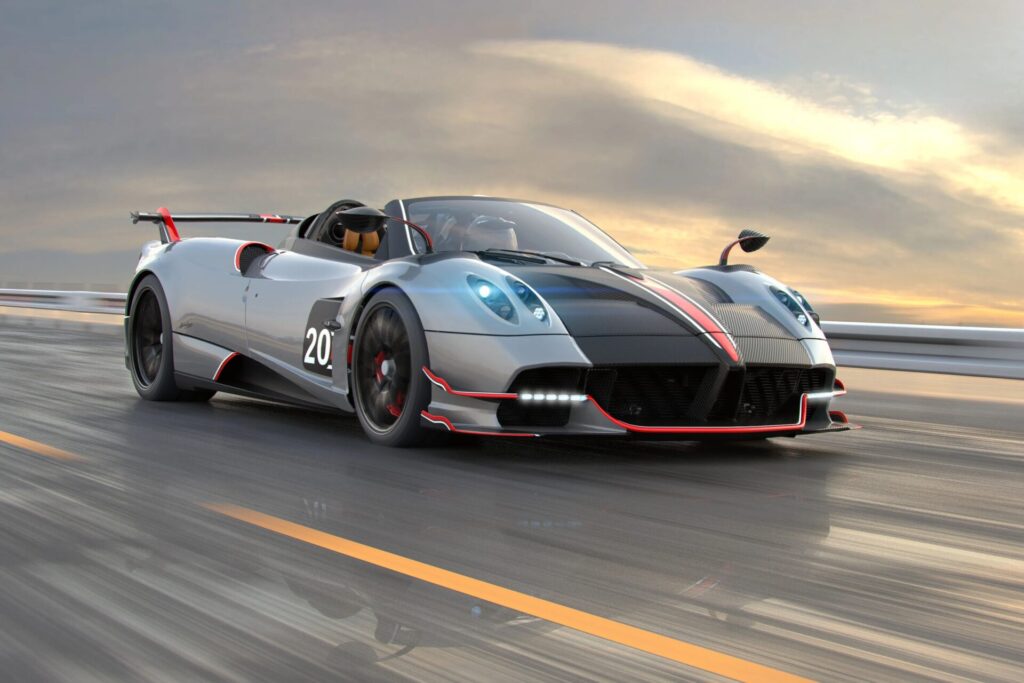
Horacio Pagani never set out to build just another exotic car. His goal was to create a machine that could blend art and engineering in ways the racing world had never seen. The Huayra is a reflection of this philosophy. While its sweeping curves and bespoke interior capture the imagination of collectors, its foundations are rooted in racing science.
Under its sculpted body lies a Mercedes-AMG twin-turbocharged V12 engine, a powerhouse specifically tuned to deliver enormous torque across the rev range. On the track, this translates into relentless acceleration, enabling the Huayra to surge forward with authority even out of tight corners where some rivals may hesitate. The engine note, a symphony of deep roars and sharp whistles from the turbos, isn’t just theater—it’s a signal of mechanical ferocity bred for competition.
Aerodynamics as a Racing Weapon
No discussion of the Huayra’s racing capability can ignore its most distinctive feature: active aerodynamics. While other hypercars use wings and diffusers, Pagani took things further. The Huayra is equipped with four independent flaps that adjust in real time, responding to speed, cornering forces, and braking. On a racetrack, this dynamic system offers a decisive edge.
Through sweeping corners, the flaps stabilize the car, keeping it planted when rivals struggle with understeer or oversteer. Under heavy braking, they act like air brakes, shortening stopping distances and giving drivers confidence to brake later than they otherwise could. In side-by-side track battles, these fractions of a second can make the difference between overtaking or being overtaken. Pagani’s attention to airflow isn’t just a stylistic flourish—it’s a racing advantage born of aerospace-level engineering. Just as precision engineering defines Pagani’s aerodynamic mastery, patriotic men’s t-shirts are often designed with careful attention to detail, balance, and bold visual impact.
Pagani Huayra vs. Ferrari’s Track-Bred Icons
When placed against Ferrari’s most track-focused machines, such as the LaFerrari or the FXX-K, the Huayra faces some of the most respected racing pedigrees in the world. Ferrari thrives on its Formula 1 heritage, and its hypercars often borrow technology straight from the pinnacle of motorsport.
Yet the Huayra holds its own. While the LaFerrari may have the hybrid boost to aid in acceleration bursts, the Huayra counters with its lighter weight and unique aero. On technical circuits, this difference becomes apparent. Drivers often describe the Huayra as incredibly communicative, a trait essential in racing where trust between man and machine determines lap times. Its handcrafted chassis and obsessive weight distribution enable it to dance with agility where heavier, more power-focused hypercars can feel blunt.
Ferrari may dominate the racing world in terms of historical victories, but the Huayra shows that on the right track, artistry combined with function can surprise even the fiercest of legends.
The Battle Against McLaren’s Track DNA
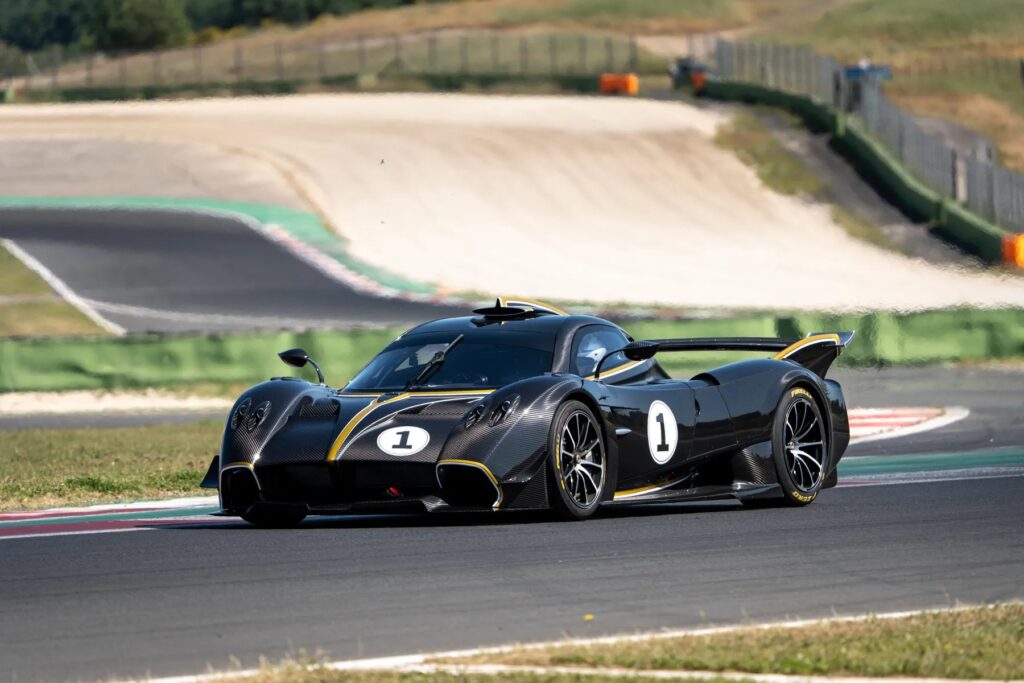
McLaren’s racing DNA is perhaps the purest of any hypercar manufacturer. With decades of Formula 1 victories, cars like the McLaren P1 and the track-only P1 GTR are engineered with surgical precision. Against such formidable opponents, the Huayra demonstrates its adaptability.
On high-speed circuits where aerodynamic balance and braking precision rule, the Huayra’s active aero allows it to remain incredibly competitive. Unlike the McLaren’s hybrid systems, which provide bursts of electric torque, the Huayra focuses on uninterrupted mechanical force. This creates a different driving rhythm, one that racing purists often appreciate for its rawness.
In endurance-style racing conditions, the Huayra’s AMG V12 proves remarkably robust, capable of delivering consistent performance without the thermal management concerns that sometimes plague hybrid systems. While McLaren may leverage data-driven precision, the Huayra appeals to drivers who crave a visceral connection—an unfiltered racing experience that emphasizes feel over numbers.
Confronting the Speed Giants: Bugatti and Koenigsegg
Racing against Bugatti’s Chiron or Koenigsegg’s Jesko presents a very different kind of challenge. These machines are obsessed with straight-line supremacy, capable of achieving mind-bending top speeds. On paper, they may appear untouchable, but racing rarely plays out on paper.
In a track environment where corners and braking zones matter as much as acceleration, the Huayra’s agility becomes its greatest strength. Bugatti’s Chiron, despite its raw power, is significantly heavier, which hinders its ability to change direction quickly. Koenigsegg’s Jesko, meanwhile, is a beast of engineering designed for extreme records, yet its aggressive power delivery can overwhelm drivers in racing scenarios that demand finesse.
The Huayra’s lighter weight, balanced chassis, and adaptive aerodynamics allow it to outmaneuver these giants where it counts: on the track. The racing adage “slow in, fast out” finds perfect expression in the Huayra, as it consistently exits corners with poise and control, setting up competitive straight-line runs even against cars with more horsepower.
The Huayra BC and Imola: Racing Evolutions
To further strengthen its racing credentials, Pagani introduced variants like the Huayra BC and the Huayra Imola. These versions push the car closer to the territory of track weapons while still retaining road legality.
The Huayra BC sheds weight through extensive use of carbon fiber and stripped-down interiors. Its suspension is tuned specifically for circuit precision, making it far sharper in handling than the base model. On the track, this translates into a car that feels entirely at home battling GT racers, a hypercar that trades a degree of comfort for lap time efficiency.
The Huayra Imola goes even further. Named after the legendary Italian racing circuit, it is essentially Pagani’s manifesto of racing obsession. With 827 horsepower, extreme aerodynamic sculpting, and track-focused calibration, the Imola is built to challenge the best on any circuit in the world. It is here that Pagani’s vision of combining beauty with racing function reaches its zenith, proving that the Huayra is not simply a work of art but a fully capable competitor against hypercar legends.
The Human Connection in Racing
One of the most overlooked aspects of racing hypercars is the emotional bond between driver and machine. Many hypercars lean so heavily on electronic aids that the driver can feel more like a passenger. The Huayra takes a different path. Its steering feedback, mechanical response, and carefully tuned dynamics create an experience that is both analog and modern.
Racing drivers who have tested the Huayra often speak about its ability to inspire confidence. On the limit, it communicates what it’s doing, allowing the driver to react instinctively. This quality is priceless in racing, where even a moment of hesitation can cost a victory. Against hypercars that sometimes sacrifice feel for technology, the Huayra earns respect by reminding drivers that racing is not only about speed—it’s about connection.
Pagani’s Racing Philosophy vs. Mass Production
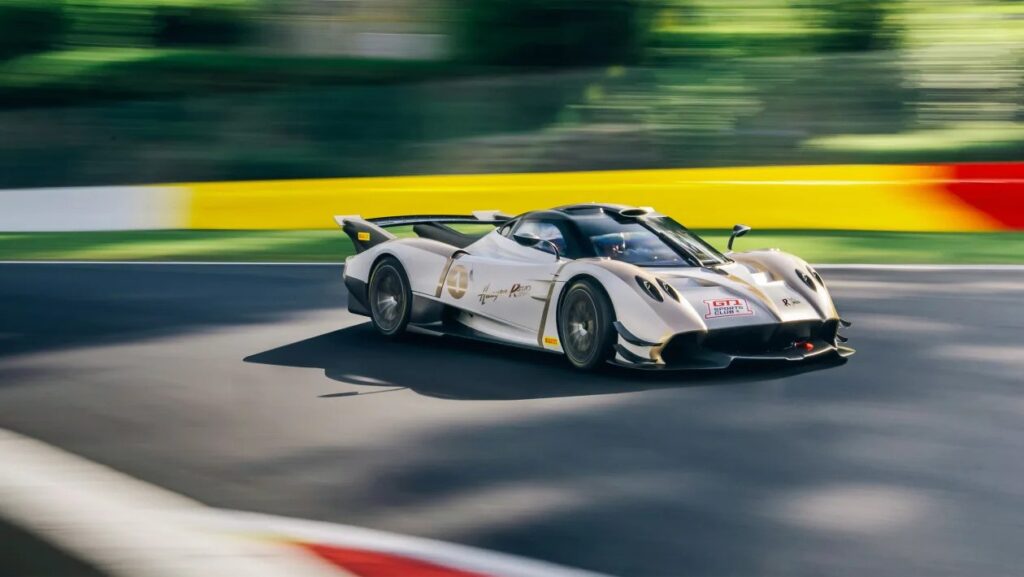
Unlike Ferrari or McLaren, Pagani is a boutique manufacturer. This means that its racing philosophy does not stem from mass production or corporate motorsport dominance. Instead, it reflects Horacio Pagani’s personal vision: to create hypercars that combine passion, artistry, and uncompromising performance.
This philosophy gives the Huayra a unique place in the racing world. While other manufacturers focus on building large fleets of race cars or developing customer racing programs, Pagani invests in making every Huayra an individual masterpiece capable of track glory.
The Future of Racing and the Huayra’s Legacy
As the automotive world moves toward hybridization and electrification, the future of racing hypercars is shifting. Cars like the Rimac Nevera showcase what electric propulsion can achieve, leaving traditional combustion hypercars to fight for relevance. Yet the Huayra stands as a reminder of why racing was never just about numbers.
Its ability to compete against the legends lies in its holistic design philosophy. It isn’t the most powerful hypercar, nor the fastest in a straight line. But in the world of racing, it thrives because it brings together balance, aerodynamics, lightweight engineering, and emotional connection in a way few others can.
Conclusion
The Pagani Huayra may not have the racing history of Ferrari, the corporate motorsport empire of McLaren, or the straight-line obsession of Bugatti and Koenigsegg. Yet when the lights go green and the race begins, it proves that beauty and performance can coexist without compromise. On the track, its active aerodynamics, AMG V12, and razor-sharp handling allow it to challenge the greatest legends of hypercar history.
What makes the Huayra extraordinary is not just its speed but its soul. In a field dominated by engineering giants, the Huayra races not as an underdog but as an equal, showing that art and racing can thrive together. It is a reminder that while numbers win records, passion wins hearts—and in racing, that may be the greatest victory of all.