
In the early 2000s, the World Rally Championship (WRC) was a theater of speed, precision, and technological ingenuity. Among the fierce competitors, the Peugeot 206 WRC stood out as a machine that redefined rally racing. Its dominance was not just a matter of raw power or mechanical superiority; it was a combination of engineering excellence, driver talent, and strategic mastery that allowed Peugeot to etch its name into rallying history.
The era of the early 2000s in WRC was defined by intense rivalry. Cars like the Subaru Impreza WRC, Ford Focus WRC, and Mitsubishi Lancer Evolution were all vying for supremacy. Yet, the Peugeot 206 WRC emerged as a consistent front-runner, often taking control of rallies from start to finish. This compact but formidable car exemplified how thoughtful engineering and meticulous preparation could outweigh sheer size or horsepower on the twisting, unpredictable stages of rally racing.
During this time, WRC was experiencing a golden era of talent. Drivers were pushing cars to the limit, and manufacturers were in an arms race of technological innovation. The 206 WRC became a symbol of Peugeot’s ambition, a statement that a relatively small car could compete with the giants of rallying. Its rise coincided with a period when rallying demanded both adaptability and endurance, and the 206 WRC excelled on every front.
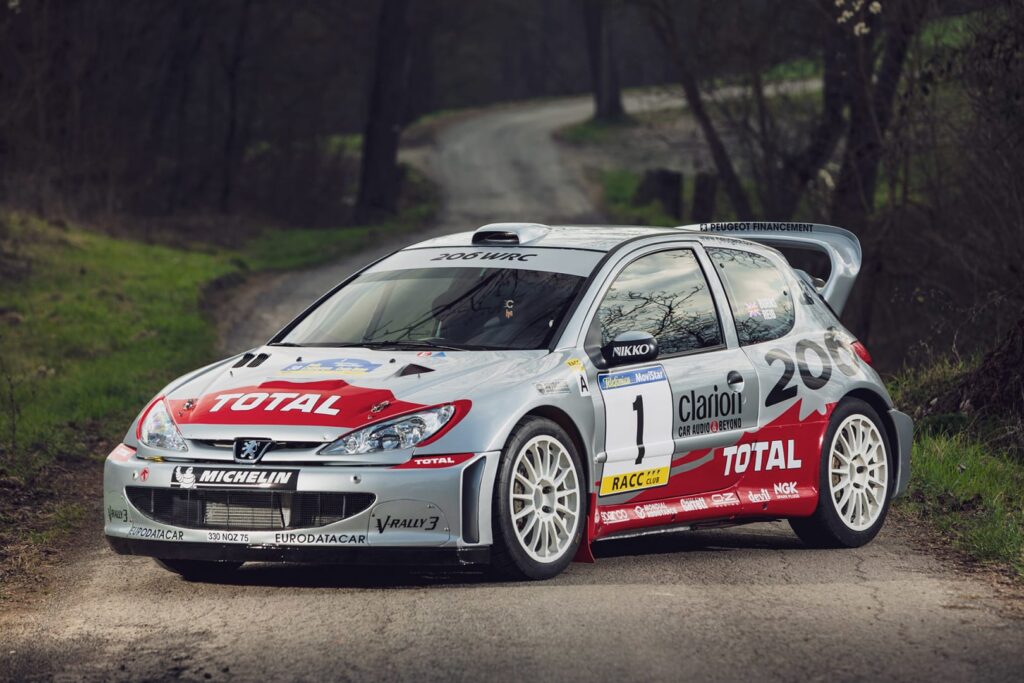
Engineering Brilliance That Translated to Victory
The heart of the Peugeot 206 WRC’s success lay in its engineering. The car was based on the standard Peugeot 206, a small hatchback, but under its exterior, it was completely transformed for the rally stage. Peugeot Sport engineered a 2.0-liter, turbocharged inline-4 engine capable of producing over 300 horsepower, coupled with a six-speed sequential gearbox. While these specifications might seem modest compared to other WRC cars of the era, the brilliance was in how the car managed power delivery, weight distribution, and handling precision.
The 206 WRC was incredibly nimble. Its short wheelbase allowed for lightning-fast direction changes on narrow gravel roads and tight tarmac corners. The suspension was finely tuned to absorb shocks from rough terrain while maintaining traction, giving drivers the confidence to push harder. Aerodynamic refinements, including spoilers and underbody enhancements, added stability at high speeds without compromising the car’s agility. Peugeot had created a car that felt almost like an extension of the driver, translating instinctive decisions into precise mechanical responses.
The engineering team also paid close attention to the car’s reliability. Rallying in the early 2000s was grueling, with stages that could last over 50 kilometers and harsh weather conditions from scorching heat to icy snow. Many competitors suffered mechanical failures or lost valuable time due to overheating engines, broken differentials, or suspension issues. The Peugeot 206 WRC, however, was designed to withstand punishing conditions without sacrificing performance, giving the team a significant psychological and strategic advantage.
Drivers Who Extracted Its Full Potential
While engineering provided the foundation, the drivers brought the Peugeot 206 WRC to life. Marcus Grönholm, one of the most iconic figures in rally history, became synonymous with Peugeot’s dominance. Grönholm’s driving style, combining aggression with tactical intelligence, perfectly matched the 206 WRC’s capabilities. His ability to navigate tricky corners, manage tire wear, and maintain consistent speed through variable conditions often left competitors scrambling to keep up.
Other notable drivers also contributed to Peugeot’s era of success. Harri Rovanperä and Gilles Panizzi added depth to the team, bringing experience on gravel, snow, and asphalt stages. Panizzi, in particular, became a tarmac specialist, dazzling fans with precise cornering and high-speed bravery. The synergy between the drivers and their engineering team was remarkable. They worked closely to fine-tune suspension settings, tire choices, and aerodynamic tweaks for each rally, ensuring that the car could perform at peak levels regardless of conditions.
The mental game was equally important. Driving a WRC car at the limit for hundreds of kilometers required intense focus and split-second decision-making. Peugeot’s drivers cultivated an almost telepathic understanding with their co-drivers, reading pace notes flawlessly and anticipating every turn, jump, or hazard. This combination of human skill and mechanical reliability was unmatched during the early 2000s.

Strategic Mastery on the Rally Stage
Rallying is as much a mental and strategic game as it is about speed. The 206 WRC’s domination in the early 2000s was also a testament to Peugeot Sport’s tactical acumen. The team meticulously analyzed each rally’s stages, weather conditions, and competitor tendencies. Tire choices were optimized for grip and durability, and split-second decisions on pacing versus risk-taking often decided the outcome of rallies.
One of the defining strategies was consistency. While rivals occasionally relied on outright speed and aggressive maneuvers, Peugeot prioritized finishing strong on every stage. Even if the 206 WRC didn’t always set the fastest time on a particular stage, it rarely faltered in a way that cost valuable championship points. This approach ensured a steady accumulation of victories, podiums, and ultimately, championship titles.
The team’s attention to data analysis was ahead of its time. Engineers collected thousands of data points from each rally, examining suspension travel, tire wear, engine performance, and even driver inputs. This level of detail allowed the 206 WRC to be continually refined throughout the season, giving Peugeot a dynamic advantage over teams that relied more heavily on intuition than science.
Iconic Rallies That Cemented Peugeot’s Legacy
The early 2000s saw several rallies where the Peugeot 206 WRC not only competed but dominated. The Monte Carlo Rally, notorious for its icy roads and unpredictable conditions, was a perfect stage to showcase the car’s agility and driver skill. Grönholm’s precise handling of the 206 WRC on treacherous corners, combined with its reliable powertrain, often left the competition in the dust.
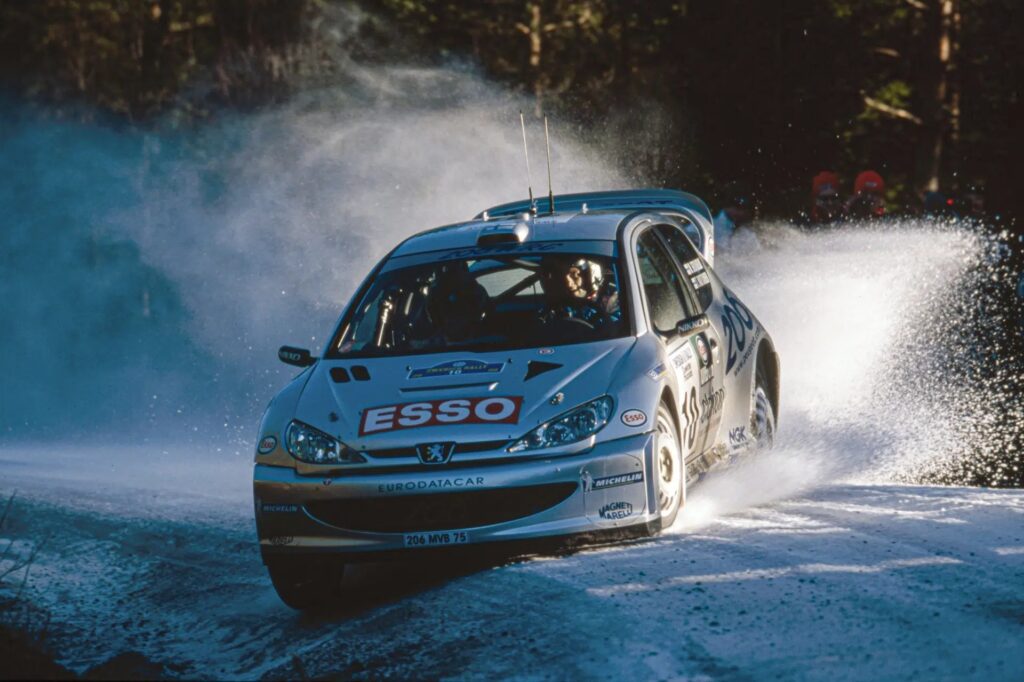
The Swedish Rally, dominated by snow and ice, presented a completely different challenge. Here, traction and control were paramount. The Peugeot 206 WRC excelled with its finely tuned all-wheel-drive system, allowing drivers to maintain high speeds without sacrificing stability. Gilles Panizzi, renowned for his tarmac mastery, demonstrated that the 206 WRC was adaptable across surfaces, consistently challenging the specialized rally cars of the time.
In gravel rallies like the Acropolis Rally and Rally Argentina, the car’s lightweight chassis and suspension setup allowed it to hug uneven terrain, take jumps with minimal risk, and accelerate out of corners with unmatched agility. Each victory in these rallies reinforced the notion that the Peugeot 206 WRC was not just a car but a complete rally weapon, capable of winning on every surface the WRC could throw at it.
Rallies weren’t just about speed; they were about endurance, reliability, and mental toughness. Many competitors fell victim to the unpredictable nature of rally racing, from sudden weather changes to treacherous terrain. The Peugeot 206 WRC, driven by skilled pilots, consistently navigated these challenges, often turning potential setbacks into opportunities for dominance.
Technological Innovations Behind the Scenes
Peugeot Sport was relentless in pushing technological boundaries. The 206 WRC benefited from innovations such as active differentials, allowing precise distribution of torque between wheels for optimal traction, and electronic management systems that fine-tuned engine performance in real-time. These advancements were critical on stages where conditions changed rapidly, such as rain-soaked tarmac or snow-covered gravel roads.
Tire management was another area where Peugeot gained an edge. The team experimented with tire compounds and pressures tailored to specific stages, ensuring maximum grip and durability. This scientific approach to tire strategy, combined with precise suspension tuning, often allowed the 206 WRC to outperform rivals even when raw horsepower was similar.
Even the car’s ergonomics were carefully considered. Drivers needed to perform at peak levels for long hours, and Peugeot’s cockpit design allowed for optimal comfort without sacrificing control. Every switch, pedal, and steering response was engineered to minimize fatigue and maximize precision, giving the 206 WRC a subtle but decisive advantage over competitors.
The Psychological Edge
There is an often-overlooked element to Peugeot’s early 2000s success: psychological dominance. Competitors knew that the 206 WRC was consistently fast, reliable, and driven by some of the best drivers in the world. This created pressure that sometimes led rivals to make mistakes. Grönholm and his teammates could capitalize on these errors, turning them into rally-winning advantages.
Peugeot’s consistent presence at the top also reinforced a culture of excellence within the team. Engineers, mechanics, and drivers shared a clear understanding of their roles, expectations, and objectives. This internal cohesion ensured that when the team arrived at a rally, every component—human or mechanical—was optimized for performance.
Conclusion: A Legacy of Excellence
The Peugeot 206 WRC’s domination of the early 2000s WRC was no accident. It was the result of visionary engineering, exceptional driver skill, and meticulous strategy. Each stage it conquered, whether on ice, gravel, or tarmac, reinforced Peugeot’s reputation as a rally powerhouse.
Even years after its heyday, the 206 WRC continues to be celebrated by enthusiasts and historians alike. It serves as a reminder that rally success is not solely about speed; it is about harmony between man, machine, and the unpredictable challenges of the road. The legacy of the Peugeot 206 WRC is not just in its trophies, but in the enduring inspiration it provides to drivers, engineers, and fans who dream of rallying greatness.