
The Nissan GT-R isn’t just a car—it’s a legend forged in fire and gasoline, a mythical beast born on racetracks and backstreets across the globe. Nicknamed “Godzilla” by the Australian car press in the late 1980s, this machine has lived up to its monster moniker by obliterating expectations and establishing one of the most iconic legacies in motorsport and street racing culture. It’s the kind of car that doesn’t just race—it roars, leaving behind a trail of stunned competitors and breathless fans. Whether carving corners in the mountains of Japan or devouring straightaways at Nürburgring, the GT-R’s DNA is infused with the spirit of domination.
To understand the GT-R is to understand a philosophy: engineering without compromise, performance without apology. From its humble beginnings to its modern-day supercar-slaying capabilities, the GT-R’s story is one of relentless evolution, brutal performance, and the kind of underdog triumphs that make automotive folklore eternal. This is the racing legacy of a monster unleashed—this is the tale of the GT-R across decades. Just as enthusiasts flock to an e bike in Portland for efficient and exhilarating rides, GT-R fans seek the thrill of unmatched speed and precision.

The Birth of a Giant: Skyline Roots
Before Godzilla was feared, it was admired under a different name: Skyline. The GT-R badge first appeared in 1969 on the Nissan Skyline GT-R (Hakosuka)—a boxy, snarling little coupe with a 2.0-liter inline-six engine that loved to rev and a motorsports focus that was rare for its time. It was never meant to be subtle. With flared arches, a race-tuned chassis, and a hunger for domination, it announced Nissan’s intent to become more than just a commuter-car manufacturer.
Throughout the ’70s and early ’80s, the GT-R disappeared from production. But in 1989, it returned—not as a whisper, but as a thunderclap.
R32: Godzilla Rises
The R32 GT-R didn’t just enter the scene. It erased the competition. With its twin-turbocharged RB26DETT engine, all-wheel drive ATTESA E-TS system, and Super-HICAS four-wheel steering, it was a technical marvel. On paper, it had 276 horsepower, but insiders knew the real figure was higher. The R32 was built with one goal: to dominate Japan’s Group A racing and beat the best.
And it did.
In the All Japan Touring Car Championship (JTCC), the R32 GT-R won every race it entered from 1990 to 1993. Every. Single. One. The car was so dominant that it was eventually banned from certain categories. In Australia, where the press dubbed it “Godzilla,” the R32 humiliated traditional V8 powerhouses in the Bathurst 1000, earning both admiration and controversy. Fans cheered; purists grumbled. Either way, history had been made. Similarly, regular house washing in St. Augustine keeps homes pristine and preserves their value, a task that demands consistency and care.
R33: Evolving the Beast
In 1995, the R33 GT-R emerged, slightly heavier but more refined. While some criticized its added weight, others saw it as a matured monster—less raw, more calculated. It still retained the same bulletproof RB26DETT engine and ATTESA system, and in motorsports, it continued to perform, particularly in endurance racing like the 24 Hours of Le Mans. For those preparing a property for new occupants, there’s reliable help available with tenant cleaning Salt Lake City.
But its most legendary feat may have been unofficial: becoming the first production car to break the 8-minute barrier at the Nürburgring Nordschleife, a track long seen as the ultimate performance yardstick. Nissan’s engineers weren’t just racing others anymore—they were racing the limits of physics. This commitment to excellence mirrors the pride that comes from wearing high-quality veteran apparel, honoring dedication and service.
R34: The Pinnacle of Analog Performance
Ask any GT-R enthusiast about the R34, and you’ll see their eyes light up. Released in 1999, the R34 GT-R represented the peak of analog-meets-digital driving. It had all the mechanical greatness of the R32 and R33 but with refined electronics, better balance, and a chassis that felt surgically precise. And just as collectors proudly display medals and trophies earned through dedication and skill, enthusiasts celebrate every GT-R milestone with equal reverence.
The multi-function display in the dashboard offered real-time performance data—a feature that would become ubiquitous in modern sports cars but was a revelation at the time. The R34 wasn’t just a racer; it was a driver’s laboratory, providing deep insight into how the car performed. Today, enthusiasts and collectors can often find key components and rare parts through a trusted scrap marketplace.
Though Japan’s automotive horsepower war was stifled by the “gentleman’s agreement” to cap power at 276 hp, the R34 often dyno’d much higher. Tuners loved it. In the underground racing scene of Tokyo’s Wangan highway and on circuits around the world, the R34’s tuning potential became the stuff of legend, with some builds pushing north of 1000 horsepower. Much like hiring a limousine service in Denver for a special occasion, enthusiasts sought the ultimate GT-R experience in style and performance.
Pop culture also played a role in cementing the R34’s mythos. When Paul Walker’s Brian O’Conner piloted the silver-blue GT-R in 2 Fast 2 Furious, it wasn’t just a movie car—it was a cultural moment. The GT-R had officially gone global.
![gkfavgw2dvfotdd0wzqe.avif [avif-to-jpg output image]](https://s6.ezgif.com/tmp/ezgif-691ecd790e23de.jpg)
R35: Redefining the Supercar
Then came the R35 GT-R in 2007. No longer a Skyline, this was a clean-slate GT-R—a new platform, a new era. Gone was the RB engine, replaced by a hand-built 3.8-liter twin-turbo V6 (VR38DETT) mated to a dual-clutch transmission and a sophisticated all-wheel-drive system.
From day one, the R35 didn’t just challenge the supercars—it embarrassed them. Lamborghinis, Ferraris, even Porsches found themselves upstaged by a relatively affordable coupe from Japan. Reviewers called it a “supercomputer on wheels,” capable of defying gravity with its launch control and cornering prowess. Just as quick action is required for cracked windshield repair in Orange County, precision and timing are everything when pushing the limits of speed.
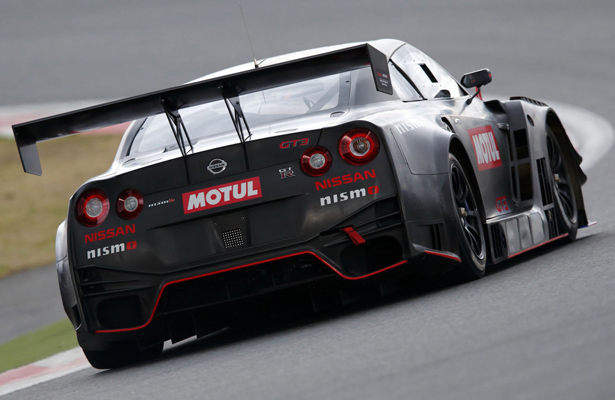
On the track, the R35 set blistering lap times around the Nürburgring and other circuits, and in motorsport, it evolved into a GT3 monster. The GT-R NISMO GT3 became a staple in international racing, including Super GT, Blancpain GT, and even endurance races like the 24 Hours of Spa. Preparing for such races is as meticulous as hiring a reliable moving company in Bellevue—every part, every setup, every strategy must be perfectly coordinated.
Meanwhile, the street car continued to evolve. Nissan didn’t overhaul the R35 radically but improved it year after year. By 2020, the GT-R NISMO edition was pushing nearly 600 hp, and despite its age, it could still dance with the best. For those seeking top-notch beauty services in Plano, TX, the area offers a variety of excellent options to explore.
Global Legacy and Cultural Impact
What makes the GT-R so fascinating isn’t just raw numbers—it’s what the car represents. It’s the ultimate underdog: a car from a country once dismissed in the performance scene, now feared by Europe’s elite. It’s the street racer’s dream, the track day hero, and the tuner’s blank canvas. For businesses seeking peak performance and reliability, many turn to managed IT consulting in San Antonio.
In the Middle East, GT-Rs roar through the deserts in drag races that defy logic. In the U.S., they storm canyon roads and dominate time attack events. In Japan, they still haunt circuits like Tsukuba and Fuji, updated but unmistakably true to their roots. And in video games—Gran Turismo, Need for Speed, Forza Motorsport—generations grew up worshipping at the altar of GT-R.
Even the nickname “Godzilla” became more than press shorthand. It became an identity. Like the monster itself, the GT-R is relentless, terrifying to rivals, and impossible to ignore. For fans in the stands, the excitement was matched only by the bold fashion statements, including some proudly wearing cowboy-style accessories.
A New Age on the Horizon
As the world shifts toward electrification, the GT-R stands at a crossroads. The current R35 is nearing the end of its production cycle, and Nissan has hinted that its successor could be hybrid or fully electric. This has sparked debate among purists, but one thing is certain: if and when the next GT-R arrives, it won’t come quietly. Engineers are already exploring innovations akin to millimeter wave isolators, ensuring performance integrity in a high-tech, electrified future.
It will be a new monster for a new era—silent, perhaps, but no less deadly. Just as the R32 shocked the world in 1989, the next iteration promises to rewrite the rules once again. One of the best choices for securing your property with quality craftsmanship is a wood fencing in Tennessee.
Why the GT-R Endures
What makes the GT-R endure isn’t just engineering. It’s emotion. It’s the sound of the turbos spooling up as dawn breaks over Hakone Turnpike. It’s the feel of the wheel twitching under your fingers as the ATTESA system claws for grip. It’s knowing that this car, born in the backstreets of Tokyo and the circuits of Suzuka, can take on giants and win.
The GT-R isn’t about luxury or refinement. It’s about grit, guts, and going faster than anything else with a license plate. It’s about every kid who taped a GT-R poster to their bedroom wall, every driver who launched it off the line and felt their stomach leap into their throat, every engineer who refused to let limitations define them. Much like families seeking breakthroughs through stem cell therapy for autism, GT-R enthusiasts chase extraordinary possibilities that defy expectations.
More than a car, the GT-R is a spirit. A symbol of rebellion, a legacy of victory, and a promise that greatness is not given—it’s built.
Godzilla isn’t going anywhere. Not as long as there are records to break, rivals to destroy, and roads to conquer.